
Disclosure: Some links on Worth It Scout may be affiliate links. If you buy through one, Worth It Scout may earn a commission at no extra cost to you. This review is based on the filter foam I actually used in my pond.
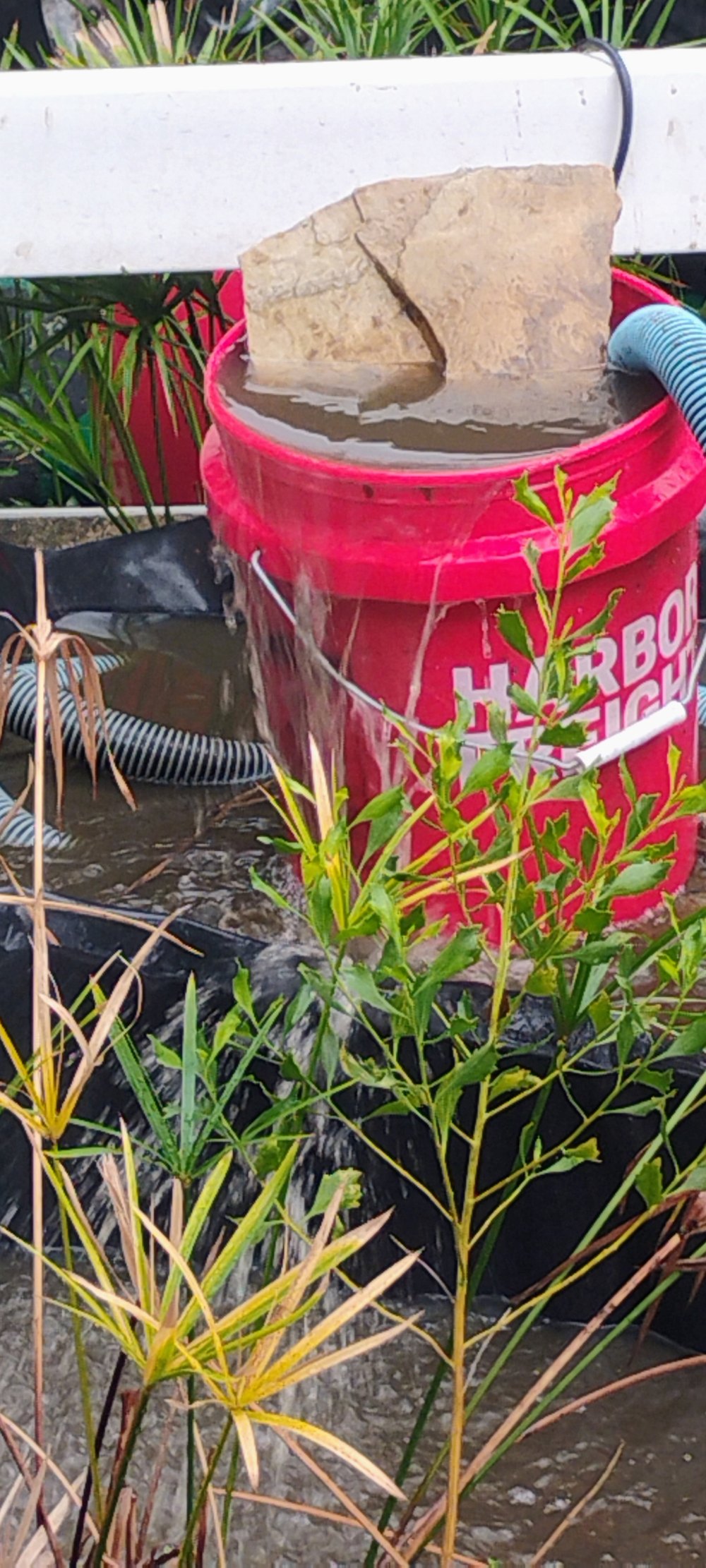
Is 20 PPI Pond Filter Foam Good? My Quick Verdict
Yes. For my pond, 20 PPI has been a good all-around mechanical filter foam. In my roughly 1,200-gallon backyard pond, it catches plant fragments, fish waste and smaller organic debris while still allowing good water flow.
If I were building my DIY pond filter again, 20 PPI is the foam density I would start with.
There is one important limitation: 20 PPI foam did not clear my green water by itself. Mechanical foam catches physical debris. My UV clarifier handled the suspended algae causing the green water.
What Does 20 PPI Mean in Filter Foam?
20 PPI means approximately 20 pores per inch. PPI describes how open or dense the foam structure is. It should not be treated as an exact particle-filtration rating.
In practical terms, I consider 20 PPI a medium-density filter foam. It is finer than a coarse 10 PPI foam but more open than a finer 30 PPI foam.
- 10 PPI: larger openings, higher water flow and better for larger debris
- 20 PPI: good balance of debris capture and water flow
- 30 PPI: finer filtration but generally requires more frequent cleaning
Two products labeled 20 PPI can still look and feel slightly different depending on the manufacturer, so I use PPI mainly as a practical comparison between foam densities.
Why I Chose 20 PPI Pond Filter Foam
My pond has fish, plants, a waterfall and the normal debris that comes with an outdoor pond. I wanted mechanical filtration that would catch smaller solids without becoming a constant maintenance problem.
Very coarse foam allows more small debris to pass. Very fine foam can load up quickly and restrict water flow.
20 PPI gave me the middle ground I wanted. When I remove the foam for cleaning, I can clearly see the debris it has captured without having to constantly tear the filter apart.
The 20 PPI Filter Foam I Used
I bought a larger 20 PPI filter foam sheet and cut it to fit my DIY filter rather than buying an expensive proprietary replacement pad.
See the 20 PPI pond filter foam I used on Amazon
If that option is unavailable or overpriced, I would compare it with another 20 PPI sheet rather than paying extra simply for a particular brand name.
Compare another 20 PPI filter foam option on Amazon
For a DIY setup, I prefer buying a larger sheet because I can cut it for a 5-gallon bucket filter, an intake or another filtration project.
What Does 20 PPI Filter Foam Catch?
In my pond, the foam has helped catch visible physical debris including:
- small plant fragments
- fine organic debris
- fish-waste particles
- loose solids stirred up in the pond
The important distinction is that this is mechanical filtration. The foam physically catches material as water passes through it.
It is not a leaf basket, it is not a UV clarifier, and it does not replace biological filtration. Each part of my pond system has a different job.
10 PPI vs 20 PPI vs 30 PPI Pond Filter Foam
| Foam | Best Use | Tradeoff |
|---|---|---|
| 10 PPI | Coarse first-stage filtration and larger debris | Higher flow but lets more small debris through |
| 20 PPI | General pond mechanical filtration | Good balance of debris capture and flow |
| 30 PPI | Finer filtering or polishing | Loads with debris faster and needs more cleaning |
For my pond, I would start with 20 PPI. I would not build the entire filter around very fine foam because I still want enough water moving through the system.
How I Use 20 PPI Foam in a 5-Gallon Bucket Filter
My filter is DIY, so cut-to-size foam makes more sense than a proprietary pad. I can shape the material to fit the bucket and change the filter design without having to find a specific replacement cartridge.
You can see the full setup here: DIY 5-gallon bucket pond filter.
Where I Place the Filter Foam
One lesson from using the filter is to make the foam easy to remove.
I want enough foam depth to trap debris without creating a thick wall that unnecessarily restricts the pump. I also want to be able to pull the foam out without dismantling the rest of the filter.
If I build the bucket again, I would make the mechanical foam the easy-to-remove section and keep heavier biological media such as lava rock contained separately in a bag.
How Often Do I Clean 20 PPI Pond Filter Foam?
I do not clean mine according to a fixed number of days. I watch the filter and the waterfall.
My signs that it is time to clean the foam are:
- weaker waterfall flow
- foam visibly loaded with debris
- water beginning to move around the foam instead of through it
I rinse the foam in pond water and put it back into service. I replace it when the foam begins tearing, breaking down or losing its shape rather than replacing it simply because it is dirty.
Can 20 PPI Foam Clear Green Pond Water?
Not by itself in my pond.
The foam helped remove physical debris, but my green-water problem was caused by suspended algae. The major improvement came when I added an inline UV clarifier and controlled the water flow through it.
If your main problem is green water rather than visible debris, read how I cleared my green pond before assuming finer filter foam is the answer.
Would I Use 20 PPI Filter Foam Again?
Yes. I would buy another large 20 PPI sheet and cut it myself.
For my DIY pond filter, it gives me the combination I care about most: useful mechanical filtration, reasonable water flow, inexpensive replacement material and the flexibility to cut whatever shape I need.
I would buy pre-cut pads only if the price made sense. For this type of bucket filter, I see no reason to lock myself into an expensive proprietary cartridge.
Worth It Scout Takeaway
If you searched for 20 PPI pond filter foam because you are trying to choose foam for mechanical filtration, this is the density I would start with.
20 PPI is coarse enough to maintain useful water flow but fine enough to catch a noticeable amount of smaller pond debris. Cut it to fit, keep it accessible for cleaning, and do not expect mechanical foam to perform the job of a UV clarifier.
Related Pond Guides
- DIY 5-gallon bucket pond filter
- Do UV pond filters really work?
- How I cleared my green pond
- Worth It Scout pond resource hub
Worth It Scout note: Product prices, availability and manufacturer specifications can change. Recheck the live listing before buying.
Leave a Reply