
Disclosure: Some links on Worth It Scout may be affiliate links. If you make a purchase through one of them, Worth It Scout may earn a commission at no additional cost to you. My opinions are based on my own experience with this pond project.
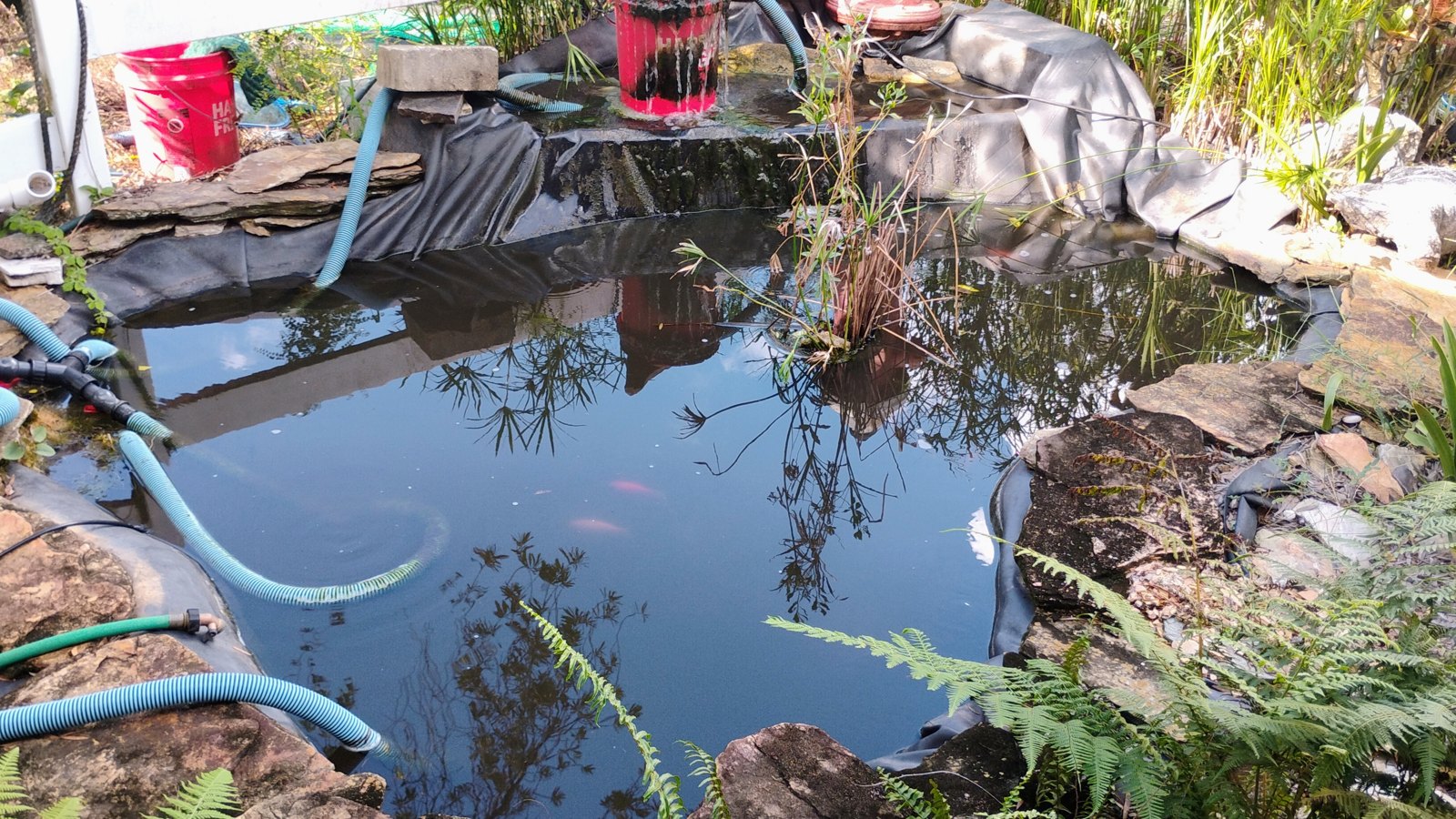
Quick result: My roughly 1,200-gallon backyard pond went from green water and poor visibility to substantially clearer water with the fish visible again. It did not happen because of one miracle product. The solution was getting the pump, mechanical filtration, biological media, UV clarifier and flow control working together.
This is not a “perfect pond” article written from a product catalog.
It is the story of a real backyard pond that turned green, pushed me into a long series of pump, filter, UV, plant and plumbing decisions, and finally taught me what mattered — and what did not.
My pond is roughly 1,200 gallons with goldfish and an elevated mini-pond/waterfall return. At one point the water was green enough that visibility was poor and the pond looked more like pea soup than a backyard feature.
I did not want to buy a huge packaged filtration system. I wanted to understand the problem and fix it with equipment I could service myself.
The setup that ultimately worked combined an OYO WATER 1,800 GPH pond pump, a Half Off Ponds Shock Wave 36W inline UV clarifier, a 3-way bypass/flow-control connector, cut-to-size 20-PPI filter foam, a DIY 5-gallon bucket filter with lava rock for biological media, better plant management and the existing waterfall return.
The important part is that no single component did everything.
- The pump moved the water.
- The filter foam caught physical debris.
- The biological media provided wet surface area for beneficial bacteria.
- The UV clarifier targeted the suspended green-water problem.
- The bypass gave me control over how much water went through the UV.
- The waterfall returned the water and gave me a visible check on circulation.
If your pond is green and you are tired of buying random fixes, this is the system I wish I had understood at the beginning.
The Before: Green Water and Poor Visibility
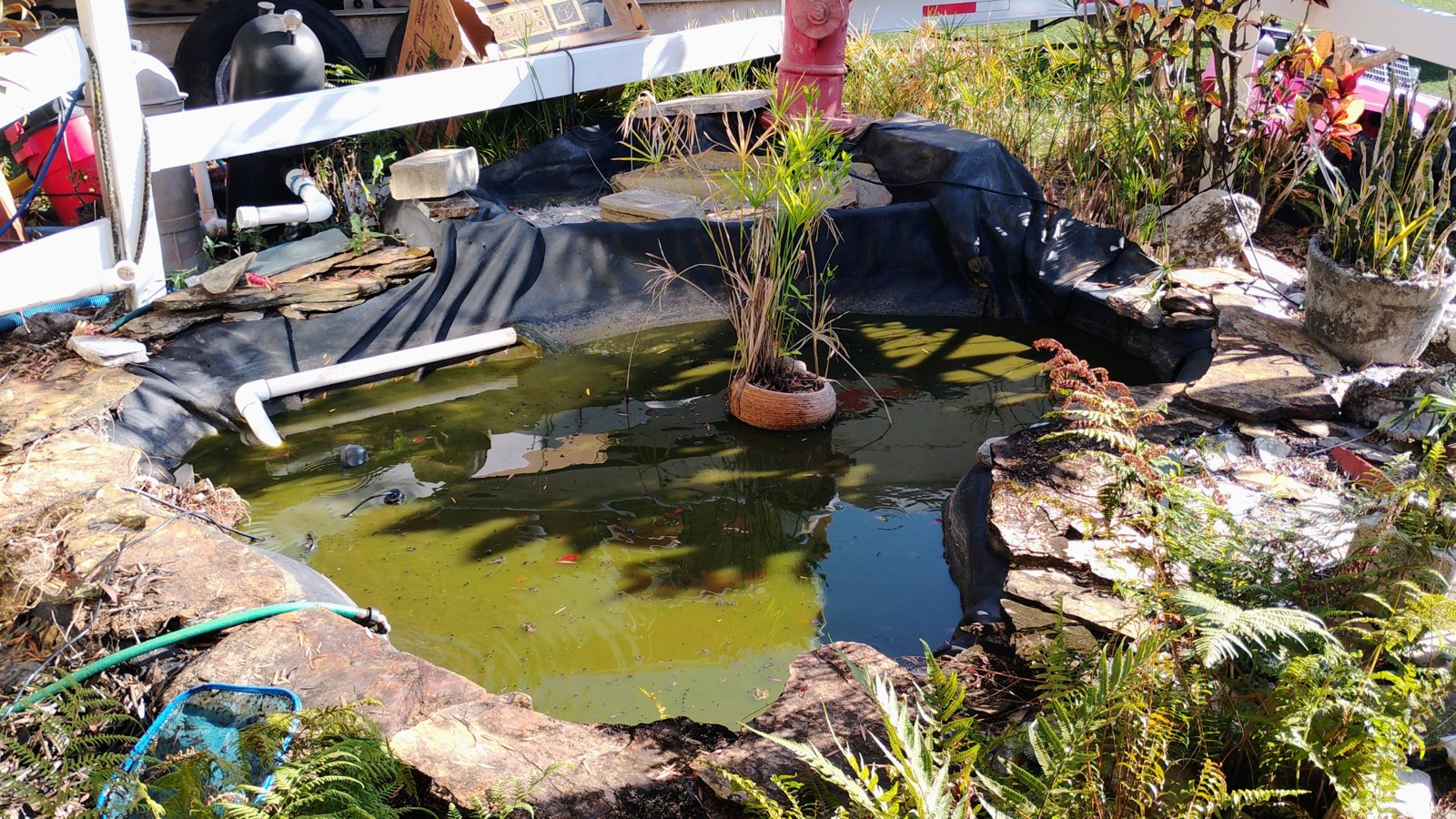
The pond started as a roughly 15-by-8-foot free-form liner pond with a shallow profile, goldfish, an upper mini-pond and a waterfall return.
The first obvious problem was water clarity.
The water had a strong green cast. I could see the surface and reflections, but not the fish and pond bottom the way I wanted.
Green water is frustrating because it makes you think the answer must simply be “more filtration.” That sent me down the same path many pond owners take: bigger pump, more media, more plants and more circulation.
Some of those things helped the overall system, but they were not all solving the same problem.
That distinction became one of the most useful lessons from the project.
My Final Pond Setup at a Glance
- Pond: About 1,200 gallons, irregular liner pond
- Fish: Goldfish
- Return: Elevated mini-pond/waterfall into the main pond
- Pump: OYO WATER 1,800 GPH pond pump
- UV: Half Off Ponds Shock Wave 36W inline UV clarifier
- Flow control: DONGKER 3-way hose connector
- Mechanical filtration: 20-PPI cut-to-size foam
- Biological media: Lava rock in a DIY 5-gallon bucket filter
- Plant tested: Hornwort
- Original pump experiment: 1/2-HP Everbilt sump pump
- Main problem: Green water plus debris and plant material reaching the pump intake
- Goal: Clear water, visible fish, inexpensive media, easy maintenance and enough flow for the waterfall
Why I Replaced the “Just Move More Water” Mindset
I originally focused heavily on circulation.
That makes sense because pond pumps are sold by gallons per hour, and a bigger number feels like a better answer.
But rated pump flow is not the same as the water flow you actually get after lifting water uphill and running it through hose, fittings, filters and a UV unit.
The OYO WATER pump I settled on is rated at 1,800 GPH. The manufacturer lists a 14-foot maximum lift and a 32.8-foot power cord.
Those are manufacturer ratings. In my real system, what mattered more was whether the pump could keep water moving through the filtration loop and still feed the waterfall.
That is why I would not size a pump from pond gallons alone.
You also have to consider the vertical rise to the waterfall, hose diameter, hose length, fittings, filter condition and any branch or bypass in the line.
For my pond, the 1,800 GPH class made sense because I was not trying to create a huge high-head waterfall. I needed steady circulation through a practical backyard system.
The UV Clarifier Was the Missing Tool for Green Water
A UV clarifier does not replace a pond filter. That was important for me to understand.
Mechanical filtration removes physical debris. Biological filtration supports bacteria involved in processing waste. A UV clarifier has a different job: pond water passes through the unit where the UV addresses suspended organisms associated with green water.
The Half Off Ponds Shock Wave unit I used is 36 watts. The manufacturer lists the 36W model for ponds up to 4,000 gallons, with an optimal flow range of roughly 1,200 to 2,400 GPH.
That range mattered to me because my pump’s nominal 1,800 GPH rating sits inside it.
In other words, the pump and UV were at least in the same general operating range on paper.
But I still did not want to force every gallon through the UV at maximum possible speed.
That is where the bypass became useful.
Why I Added a 3-Way Bypass
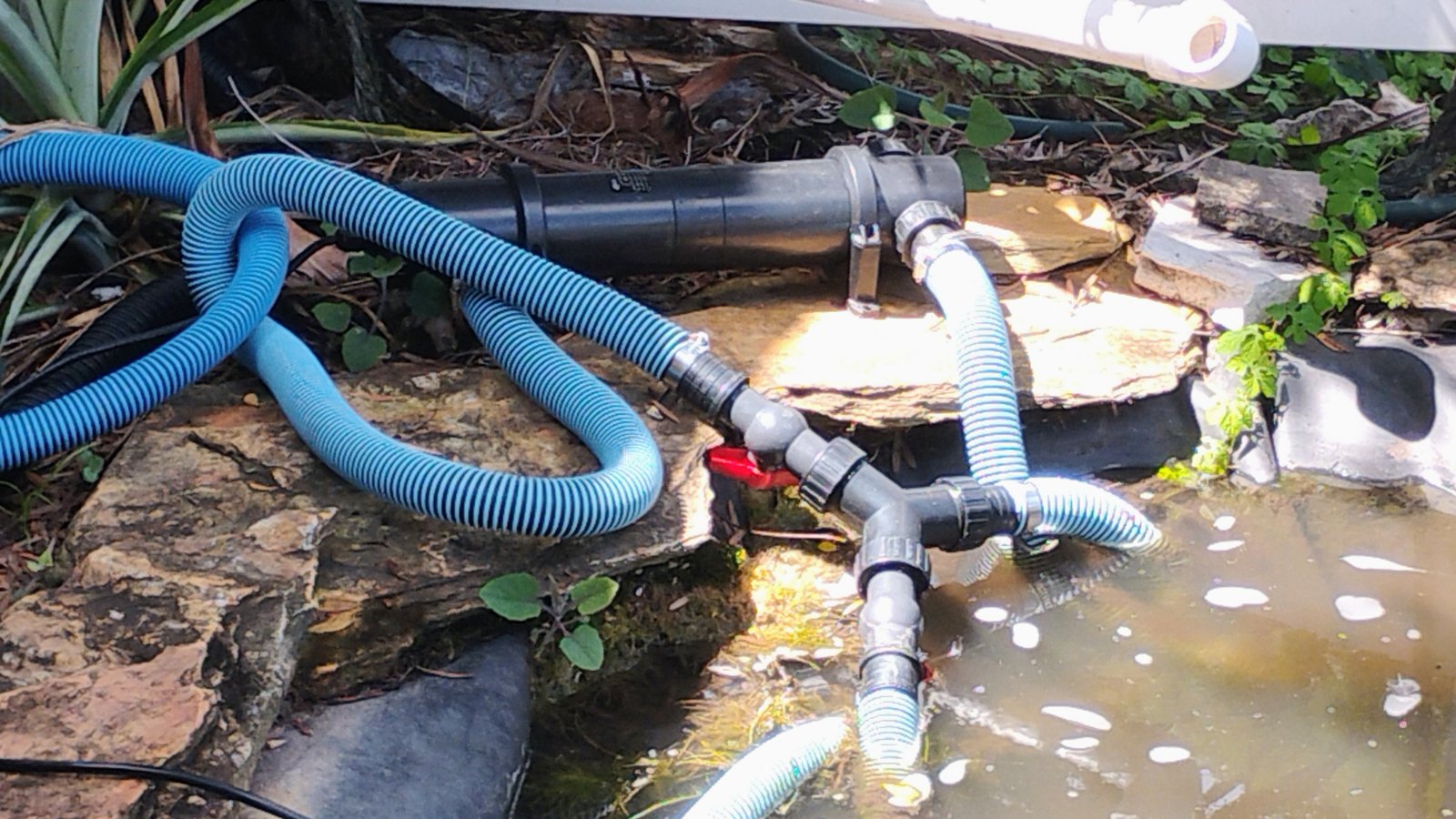
The 3-way connector gave me something a simple straight-line installation did not: control.
Instead of treating the pump, UV and waterfall as one fixed pipe, I could split the flow and adjust the branches.
That let me send a controlled portion through the UV while keeping enough circulation moving through the rest of the system.
The DONGKER connector I used accepts common pond-hose sizes and uses individual valves on the outlets.
For a DIY pond, this is the kind of inexpensive part that can make the whole system easier to tune.
I would buy the bypass again before I would buy a larger pump just to compensate for poor flow control.
The DIY 5-Gallon Bucket Filter
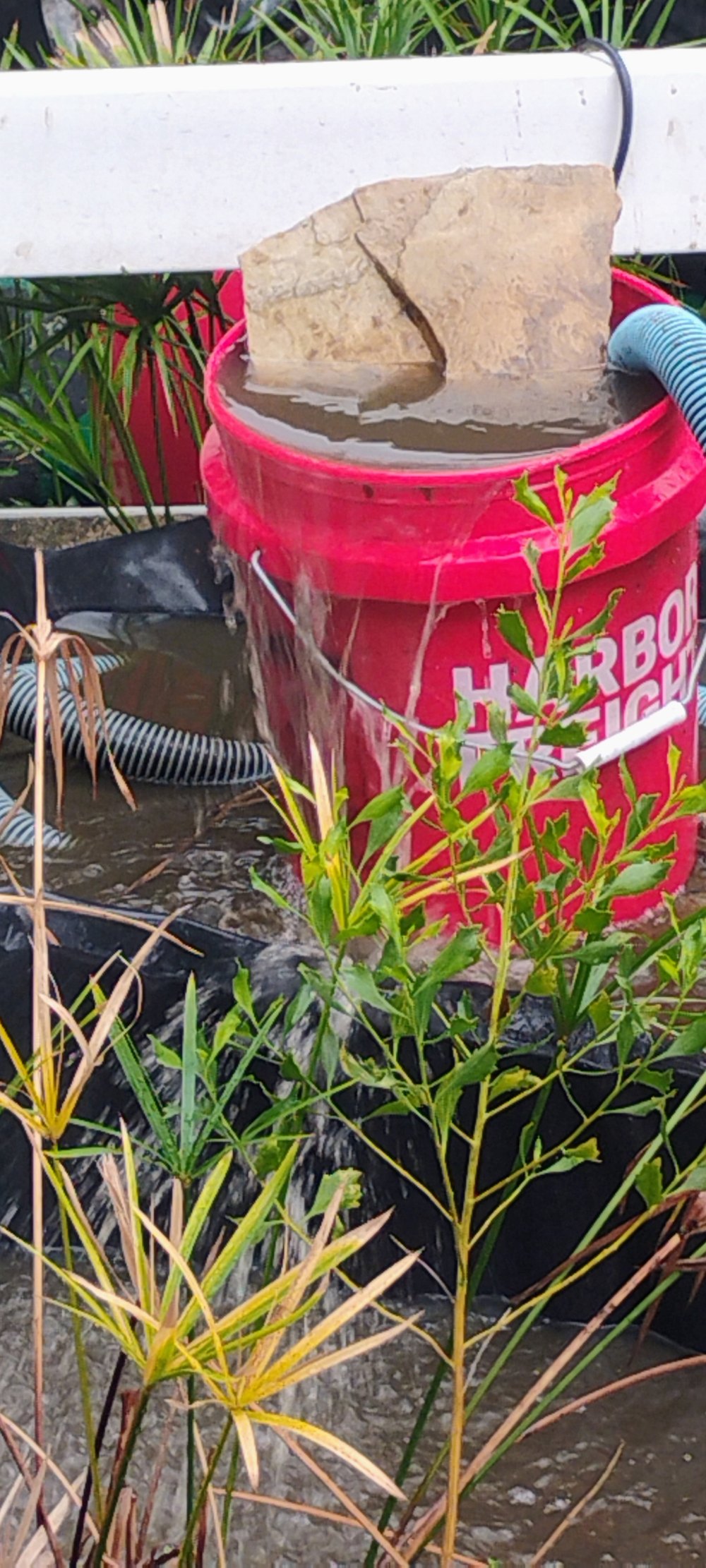
The bucket filter is not pretty.
That is also why I like it.
A 5-gallon bucket is inexpensive, easy to modify, easy to open and easy to replace if you change the design later.
My goal was to combine mechanical filtration and biological media without buying an expensive pressure filter.
The system evolved through trial and error, but the basic idea was straightforward: water moves through filter material that traps solids, then through media that provides a large wet surface for biological filtration, then returns to the pond system.
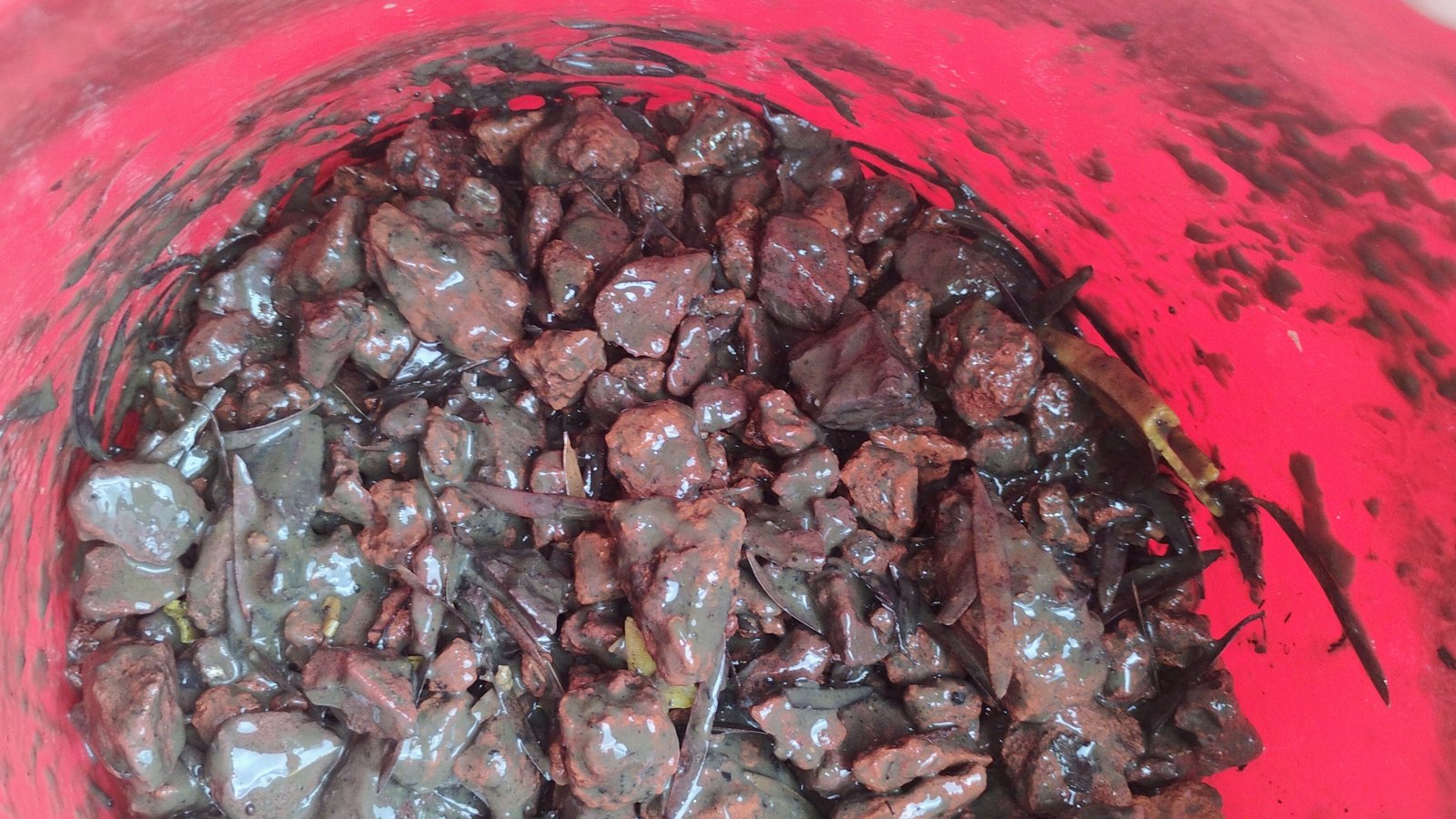
I used cut-to-size foam and lava rock.
The foam handles the dirt I want to physically remove. The lava rock serves as inexpensive biological media.
What I Learned About 20-PPI Filter Foam
The 20-PPI foam turned out to be one of the most useful low-cost purchases in the project.
“PPI” means pores per inch. At 20 PPI, the foam is open enough to move a useful amount of water while still catching a meaningful amount of pond debris.
I used both AFACYGN 20-PPI sponge pads and ALEGI 20-PPI foam during the project.
The biggest advantage is flexibility.
You can cut the foam to fit a bucket, box, intake chamber or pre-filter. When it gets loaded with debris, pull it out and rinse it instead of turning a simple maintenance job into a complete filter disassembly.
The tradeoff is that foam only helps if you actually clean it.
As the foam loads with debris, flow drops. That reduced flow changes what happens everywhere downstream, including the UV, waterfall and pump.
Lava Rock: Cheap Biological Media With a Catch
Lava rock is inexpensive and porous, which is why it was attractive for my DIY biological filter.
It worked for my budget build, but it is not the cleanest material to service.
It is heavy, it holds dirt and the pieces can be irregular.
If you build the filter so that you have to remove all the rock every time you want to clean the mechanical stage, you will eventually hate your own design.
If I were rebuilding the bucket from scratch, I would make the mechanical foam the easiest thing to reach and keep the lava rock or other biological media in a removable bag or separate section.
That way the part that needs frequent cleaning comes out first. The biological media should not be the thing you are tearing apart every weekend.
The Plant Mistake: Hornwort and the Pump Intake
I added hornwort because I wanted submerged plants in the pond.
The problem was placement.
The hornwort was pulled toward the pump intake.
That created exactly the maintenance problem I was trying to avoid: plant material moving into the intake, reducing flow and increasing the chance of clogging.
The lesson was not that hornwort is bad. The lesson was that plants and pump intakes need physical separation.
If I use hornwort again, I would contain it or place it where the circulation pattern cannot drag it directly into the pump.
Why the Waterfall Still Matters
The waterfall is not just decoration.
In my system it is also the visible return point.
Water is pumped into the elevated mini-pond and then returns by gravity to the main pond.
That gives me circulation I can see and hear. If the waterfall flow changes noticeably, it is often a clue that a filter is clogging, the intake is restricted or something in the plumbing has changed.
It also creates surface movement.
I would keep the waterfall return even if I changed nearly every other component in the system.
What Actually Worked Together
The biggest mistake in pond troubleshooting is asking one product to solve every problem.
My clear-water result came from getting several jobs aligned:
- Enough pump flow to keep the pond circulating.
- Mechanical foam to physically catch suspended debris.
- Biological media to support the pond’s waste-processing bacteria.
- A UV clarifier specifically addressing the suspended algae associated with green water.
- A bypass to keep UV flow controllable rather than simply blasting everything through one path.
- Better plant placement so the pump was not constantly pulling in vegetation.
- A waterfall return that kept the system circulating and gave me an easy visual check on flow.
What I Would Buy Again
- OYO WATER 1,800 GPH pump — Yes. For this scale of pond and a modest waterfall, the flow was useful without jumping to a much larger pump than the project needed.
- Half Off Ponds Shock Wave 36W UV — Yes. I would use it again when green water is the problem, but not as a substitute for mechanical or biological filtration.
- 3-way flow-control connector — Yes. It is one of the least glamorous parts of the system, but one of the most useful because it gives me control.
- 20-PPI foam — Absolutely. It is inexpensive, easy to cut, easy to replace and useful in several parts of a DIY filtration system.
- Lava rock — Yes for a budget build. I would package it so it is easy to remove. If easy cleaning mattered more than lowest cost, I would also compare purpose-made pond bio media.
- Hornwort — Maybe. I would use it again only with better containment or placement away from the intake.
What I Would Skip or Change
- I would not start by buying the biggest pump I could afford.
- I would not send all of the flow through a UV without considering the manufacturer’s recommended flow range.
- I would not bury the easiest-to-clog mechanical media underneath heavy biological media.
- I would not place loose plants where the pump naturally pulls them toward the intake.
- I would not assume green water simply means the pond is “dirty.” Green water and physical debris are different problems and should be treated differently.
The Shopping List I Would Use Today
- OYO WATER 1,800 GPH pond pump
- Half Off Ponds Shock Wave 36W UV clarifier
- DONGKER 3-way flow-control connector
- AFACYGN 20-PPI mechanical filter foam
- ALEGI 20-PPI cut-to-size filter foam
- Aquatic Arts hornwort
- DIY filter body: Standard 5-gallon bucket or similar serviceable container
- Biological media: Lava rock in a removable bag or purpose-made pond bio media
- Useful extras: Stainless hose clamps, spare pond hose, filter bags and a practical way to isolate components for cleaning
Product availability, specifications and pricing can change, so I always recheck the current listing before buying.
How Much of This System Is DIY?
Most of it.
That is part of the appeal.
I am not trying to pretend a red 5-gallon bucket is more elegant than a commercial filter.
The advantage is that I understand what is inside it, I can open it in seconds, replacement foam is inexpensive and I can change the media layout without replacing an entire filter system.
If you want a polished, hidden, low-touch installation and do not mind paying more, a commercial pressure filter or complete pond system may be the better fit.
If you enjoy building, want to understand the water path and would rather spend money on the components that actually matter, this DIY approach is much easier to justify.
Who This Setup Is For
This approach makes the most sense for a small-to-medium backyard pond where the owner is comfortable cutting hose, cleaning foam, adjusting valves and making incremental changes.
It is especially relevant if the pond has green water, a waterfall or raised return, and enough room around the edge for a serviceable filter and UV.
It is less attractive if you want every component buried and invisible, need a completely hands-off system or have a fish load and pond size that demand a much larger purpose-built filtration system.
My Maintenance Routine Now
The maintenance lesson was simple: clean the parts that restrict flow before they create another problem.
- I check the pump intake and pre-filter area for leaves and plant material.
- I watch the waterfall because reduced waterfall flow is an early warning that something may be clogging.
- I rinse the mechanical foam when it becomes loaded with debris.
- I keep the biological media wet and avoid treating it like something that needs to be scrubbed spotless.
- I inspect the UV and plumbing for leaks and keep an eye on hose connections and valves.
The goal is not to make every surface sterile.
The goal is consistent water movement and a stable pond.
The Before-and-After Result
The reason I think this project belongs at the center of Worth It Scout is visible in the photos.
The early pond was green enough that the water itself dominated the view.
The later pond is visibly clearer, with the fish showing through the water instead of disappearing behind a solid green cast.
That is the kind of result I trust more than a box claim because it came from equipment that was actually installed, adjusted, clogged, cleaned and lived with.
There were mistakes along the way, and those mistakes are part of the value of the project.
Worth It Scout Verdict
If I were rebuilding this 1,200-gallon pond tomorrow, I would use the same basic strategy: an appropriately sized pump, easy-to-clean mechanical foam, separate biological media, a correctly sized inline UV for green water, controllable bypass plumbing and a waterfall return.
I would spend less time chasing one miracle product and more time making sure every part of the system had one clear job.
The OYO WATER 1,800 GPH pump, Shock Wave 36W UV, inexpensive 20-PPI foam and simple bypass plumbing were all purchases I could justify because each one solved a specific problem in the real system.
The DIY bucket filter is not beautiful.
The clear pond is.
That trade was worth it.
Frequently Asked Questions
Will a UV clarifier replace my pond filter?
No. I used the UV alongside mechanical and biological filtration. The UV addressed the green-water problem; the other filter stages still had their own jobs to do.
Is 1,800 GPH too much for a 1,200-gallon pond?
Not automatically. Actual flow is reduced by vertical lift, hose length, fittings and filters. I sized my system around the real water path and waterfall rather than pond volume alone.
Why use a bypass around the UV?
The bypass gave me control over the amount of water going through the UV while preserving circulation elsewhere in the system.
Can I use lava rock as pond biological media?
I did. It is inexpensive and provides wet surface area, but it is heavy and messy to clean. I would keep it in a removable bag or separate chamber.
What filter foam did you use?
I used 20-PPI cut-to-size foam, including AFACYGN and ALEGI products.
Did hornwort help?
I used hornwort, but I had to rethink the placement because it was being pulled toward the pump intake. I would use it only where it can stay contained and away from the intake.
Related Pond Guides
- Is a 36W UV Clarifier Worth It for a Backyard Pond? My Real Results
- Best Pond Pump Size for a 1,000–1,500 Gallon Pond With a Waterfall
- How to Build a 5-Gallon Bucket Pond Filter: My Simple DIY Setup
- 20-PPI Pond Filter Foam: What It Catches, How I Use It, and When I Clean It
Worth It Scout note: product prices, availability and manufacturer specifications can change. Recheck the live listing before you buy.
Leave a Reply