
Disclosure: Some links on Worth It Scout may be affiliate links. If you buy through one, Worth It Scout may earn a commission at no extra cost to you. This guide is based on the DIY pond filter I actually built and used on my own pond.
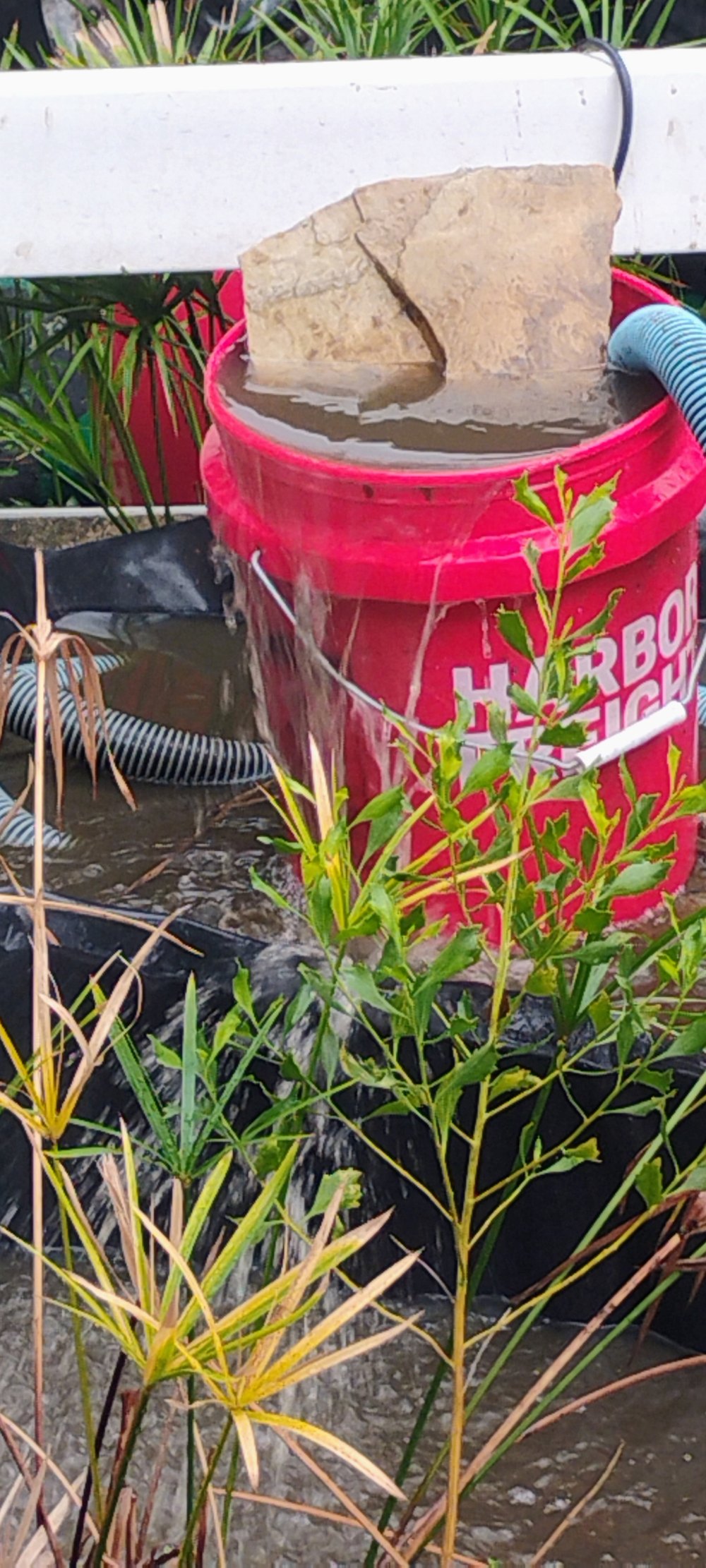
DIY 5-Gallon Bucket Pond Filter: Quick Verdict
Yes — a 5-gallon bucket can make a useful DIY pond filter if the water is forced through the filter media instead of around it.
I built mine for an approximately 1,200-gallon backyard pond because I wanted inexpensive mechanical and biological filtration without immediately buying a large packaged filter system.
My setup used 20-PPI filter foam for mechanical filtration and lava rock as inexpensive biological media.
If I built it again, I would keep the same basic idea but make the foam easier to remove, put the biological media in mesh bags, and design the plumbing around easier maintenance.
Why I Built a 5-Gallon Bucket Pond Filter
I did not start this project because I wanted a red bucket sitting beside my pond.
I wanted clearer water without spending a large amount of money on a packaged filtration system before I understood what my pond actually needed.
A 5-gallon bucket solved several problems at once:
- cheap enough to experiment with
- easy to drill and modify
- easy to open for maintenance
- large enough for mechanical foam and biological media
- easy to rebuild if the first design did not work well
That made it a good test platform for my pond.
How My DIY Bucket Pond Filter Works
The bucket itself is only the container. The important part is what happens to the water inside it.
I wanted two main filtration stages:
- Mechanical filtration to catch physical debris
- Biological filtration to provide wet surface area for beneficial bacteria
My mechanical stage used cut-to-size 20-PPI filter foam.
My biological stage used lava rock.
The most important design rule is that the water must actually pass through the media. If water can take an easy shortcut from the inlet to the outlet, much of the filter material is doing very little.
What I Used in My 5-Gallon Bucket Filter
- 5-gallon bucket or similar serviceable container
- 20-PPI open-cell filter foam
- lava rock or other biological media
- reusable mesh media bags
- pond hose
- bulkhead or pass-through fittings
- hose-barb adapters
- stainless hose clamps
- optional coarse pre-filter material
The exact fittings depend on your pump, hose diameter and how you want water to enter and leave the bucket.
Why I Used 20-PPI Filter Foam
20 PPI means approximately 20 pores per inch. For my pond, it gave me a useful balance between debris capture and water flow.
Very fine foam can catch smaller material but may clog more quickly. Very coarse foam allows excellent flow but may let more smaller debris pass through.
20 PPI gave me the middle ground I wanted.
I used cut-to-size foam from more than one source during the project, including ALEGI and AFACYGN 20-PPI products. The brand mattered less to me than getting open-cell foam I could cut to fit.
Check ALEGI 20-PPI filter foam on Amazon
Compare AFACYGN 20-PPI filter foam on Amazon
For a deeper explanation of foam density, see my 20-PPI pond filter foam guide.
The Most Important Design Lesson: Make the Foam Easy to Remove
Mechanical filter media gets dirty. That sounds obvious, but it should influence the entire filter design.
If the foam is buried underneath heavy biological media, every cleaning becomes a teardown.
That becomes annoying very quickly.
If I rebuilt the filter today, I would make the mechanical foam the first filtration section I could reach.
Ideally I want to:
- open the filter
- lift out the dirty foam
- rinse it
- put it back
- close the filter
The part that needs the most frequent maintenance should be the easiest part to access.
Why I Used Lava Rock for Biological Filtration
Lava rock is inexpensive and porous, which makes it attractive as budget biological filter media.
I was experimenting with a low-cost DIY system, so spending heavily on specialty biological media did not make sense until I knew the basic design worked.
The lava rock gave me a large amount of wet surface area for biological filtration without adding much cost.
What I Would Change About the Lava Rock
I would put it in reusable mesh bags.
That is probably the easiest improvement I would make to the original design.
Lava rock is heavy, irregular and capable of collecting dirt. Loose rock makes the bucket harder to service.
A mesh bag keeps the rock together and lets me lift the biological media out as one unit when I need access to the foam or bottom of the bucket.
I would also consider lightweight purpose-made pond biological media if the price were reasonable.
The point is not that lava rock is bad. The lesson is that cheap media becomes less attractive when it makes maintenance difficult.
The 5-Gallon Bucket Filter Layout I Would Use Now
If I rebuilt the filter today, I would organize the entire layout around water flow and easy maintenance.
From the easiest-access side toward the outlet, I would use:
- Coarse pre-filter material if larger debris is a problem
- 20-PPI mechanical foam as the main debris-catching stage
- Optional second foam layer only if the system can handle the added restriction
- Biological media in removable mesh bags
- A clear path to the outlet
I would avoid packing the bucket so tightly that water struggles to move through the media.
A pond filter only works while water is moving through it.
Where Should the Inlet and Outlet Go?
The inlet and outlet should be arranged so water is forced through the filter media instead of taking a shortcut across the bucket.
The exact hole positions depend on whether the filter is operating by gravity, pump flow or as part of an open return system.
My project evolved through trial and error, so I would not claim that one hole position works for every pond.
The rule I would follow is simple:
Make the water enter on one side of the media stack and leave only after it has passed through the filtration stages.
If you use a pressurized layout, a standard thin-wall bucket may not be appropriate. My setup was part of a simple DIY pond filtration system, not a commercial pressure vessel.
Why Water Flow Matters More Than Adding More Filter Media
It is tempting to keep adding foam and media because more filtration sounds better.
But every additional layer creates resistance.
As mechanical foam fills with debris, that resistance increases even more.
If the flow drops too much, the waterfall slows and the behavior of the entire circulation system changes.
That made my waterfall a useful diagnostic tool.
If waterfall flow dropped noticeably, I knew to check:
- pump intake
- filter foam
- hose or fittings
- other possible restrictions
The filter needs to clean the water without strangling the circulation loop.
How I Clean My DIY Bucket Pond Filter
I remove the mechanical foam when it becomes visibly loaded with debris or when water flow begins to drop.
I rinse the foam in pond water rather than trying to make it look brand new.
The goal is to remove trapped debris and restore flow.
I do not aggressively clean all of the biological media every time I clean the mechanical stage.
The mechanical foam needs frequent access. The biological section is supposed to remain biologically active.
How Often Does a 5-Gallon Bucket Pond Filter Need Cleaning?
I do not use a fixed cleaning schedule.
Different ponds load filters at different rates.
A lightly stocked shaded pond may go much longer between cleanings than a pond dealing with:
- falling leaves
- fish waste
- string algae
- loose plant material
- heavy sunlight
I use water flow as one of my main indicators.
If the waterfall slows or visible debris begins accumulating despite the pump running, I check the mechanical filter stage.
For me, maintenance responds to what the pond is doing rather than a calendar.
Can a 5-Gallon Bucket Filter Clear Green Pond Water?
Not by itself in my pond.
The bucket filter catches physical debris and provides biological filtration.
My green-water problem involved suspended algae. The big improvement came from combining the filter with an appropriately used UV clarifier.
The bucket filter and UV perform different jobs:
| Component | Main Job in My Pond |
|---|---|
| 5-gallon bucket filter | Catches physical debris and provides biological media |
| 20-PPI foam | Mechanical filtration |
| Biological media | Provides wet surface area for beneficial bacteria |
| UV clarifier | Targets suspended green-water algae |
You can read the complete pond cleanup here: How I cleared my 1,200-gallon green pond.
What I Would Not Copy Exactly
I would not copy the appearance of my original filter.
The red bucket and improvised rock cover were functional, not elegant.
For a more finished yard, I would use the same filtration concept in a darker serviceable container or hide the filter behind landscaping.
But I would never hide it so well that maintenance becomes difficult.
I would rather see a little plumbing than build an attractive enclosure that I dread opening every time the foam needs cleaning.
What I Would Buy Again
| Item | Would I Use It Again? | My Take |
|---|---|---|
| 20-PPI foam | Yes | Good balance of flow and mechanical filtration |
| 5-gallon bucket or similar container | Yes | Cheap, easy to modify and easy to replace |
| Lava rock | Yes, with changes | I would put it in mesh bags |
| Reusable mesh media bags | Definitely | Makes maintenance much easier |
| Simple hose fittings and clamps | Yes | Easy to source and change later |
| Extra pond hose | Yes | Makes future layout changes easier |
What I Would Upgrade First
If I decided to spend more money on this filter, I would not immediately replace the bucket with an expensive filter box.
I would upgrade in this order:
- Improve the media arrangement
- Make the foam easier to remove
- Improve the plumbing and access
- Use lighter purpose-made biological media if it makes maintenance easier
- Only then decide whether the bucket itself is actually limiting the system
DIY 5-Gallon Bucket Pond Filter Shopping List
- serviceable 5-gallon bucket or similar container
- 20-PPI open-cell filter foam
- reusable mesh media bags
- lava rock or pond biological media
- pond hose sized for the pump and fittings
- bulkhead or pass-through fittings
- hose-barb adapters
- stainless hose clamps
- optional coarse pre-filter material
- optional additional foam layer
Would I Build a 5-Gallon Bucket Pond Filter Again?
Yes.
For a low-cost DIY pond project, the bucket gave me an inexpensive way to experiment with mechanical and biological filtration while learning what actually mattered in my system.
The concept worked well enough that I would use it again. I would just build the next version around easier maintenance from the beginning.
Worth It Scout Takeaway
If you searched for a DIY 5-gallon bucket pond filter, I think the idea is worth trying if you want a low-cost, serviceable filter that you can modify yourself.
The bucket is not the magic part. The important pieces are water flow, accessible mechanical foam, biological media that is easy to remove, and forcing the water through the filtration stages instead of letting it bypass them.
My biggest improvement would be simple: build the filter around maintenance before you build it around appearance.
DIY Bucket Pond Filter FAQ
Does a 5-gallon bucket work as a pond filter?
It can. My bucket provided a container for mechanical foam and biological media. The important part is forcing water through the media and maintaining enough flow through the system.
What filter foam did I use?
I used 20-PPI open-cell filter foam because it gave me a good compromise between debris capture and water flow.
What biological media did I use?
I used lava rock because it was inexpensive and porous. If I built the filter again, I would put the lava rock in removable mesh bags.
How often should a bucket pond filter be cleaned?
I do not use a fixed schedule. I watch water flow, waterfall strength and how much debris has accumulated in the mechanical foam.
Will a bucket filter clear green pond water?
Mechanical filtration alone did not solve my green-water problem. My system improved when I combined mechanical filtration with an inline UV clarifier for suspended algae.
How big a pond can a 5-gallon bucket filter handle?
I used mine as part of the filtration system on an approximately 1,200-gallon pond. I would not use my experience as a universal gallon rating because fish load, pump flow, debris, sunlight and other filtration all affect how much work the filter has to do.
Related Pond Guides
- 20 PPI Pond Filter Foam: What It Means + My Results
- How I Cleared My 1,200-Gallon Green Pond
- Do UV Pond Clarifiers Really Work?
- Worth It Scout Pond Research Hub
Worth It Scout note: Product prices, availability and manufacturer specifications can change. Recheck the live listing before buying.
Leave a Reply