
Fix the pond problem first. Then decide what equipment is worth buying.
These guides come from my roughly 1,200-gallon backyard pond with goldfish, a waterfall return, DIY filtration and an inline UV clarifier. The goal is not to sell one “perfect” system. It is to show what each part actually did, where I made mistakes, and how I would approach the problem now.
Start here if your pond is green
My clearest lesson was that different parts solve different problems. The pump moves water. Mechanical media catches debris. Biological media provides surface area for beneficial bacteria. The UV clarifier addressed suspended green-water algae. Flow control helped the UV do its job instead of simply sending the maximum possible water through it.
What are you trying to solve?
I can barely see the fish
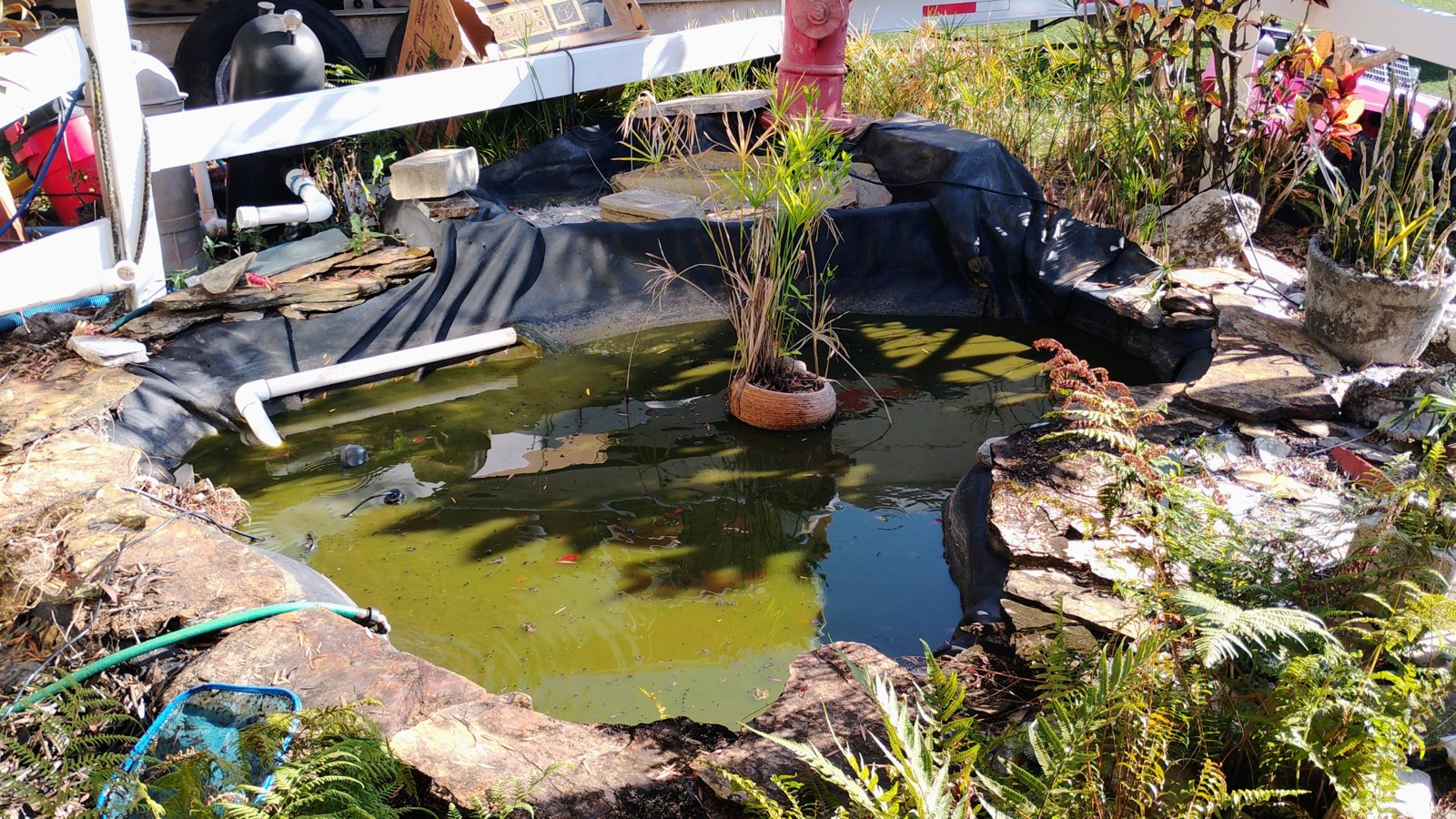
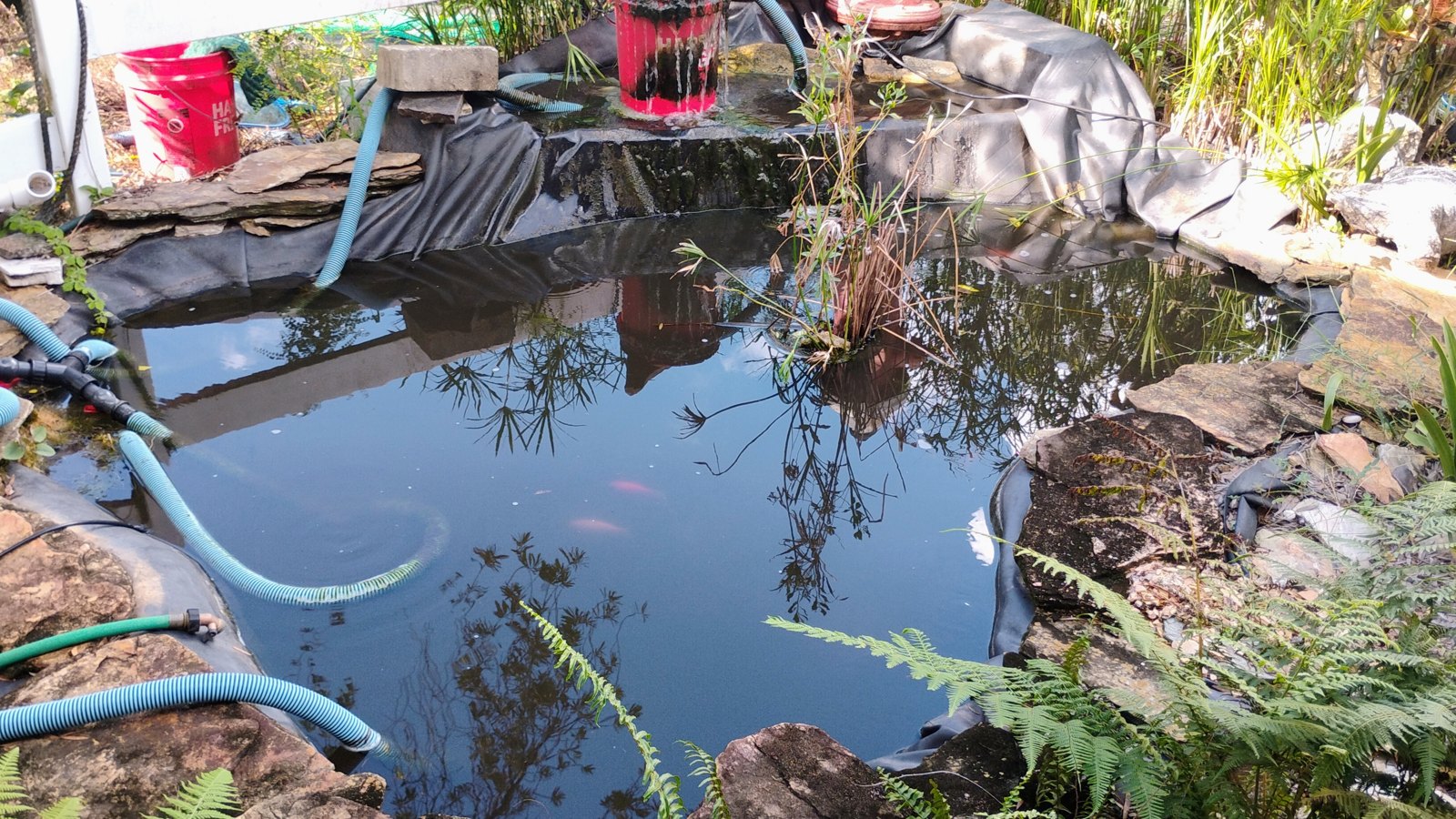
See the full system change and why UV became the missing tool for suspended green water.
Full case study → UV researchDo UV pond filters really work?
My 36W inline results on green water, what UV did not do, and why the bypass mattered.
See my real UV results → Flow problemHow much pump do I actually need?
Rated GPH is only the starting point once head height, tubing, filtration, UV and waterfall return are involved.
Read the pump-sizing guide → DIY filtrationCan I build a simple filter myself?
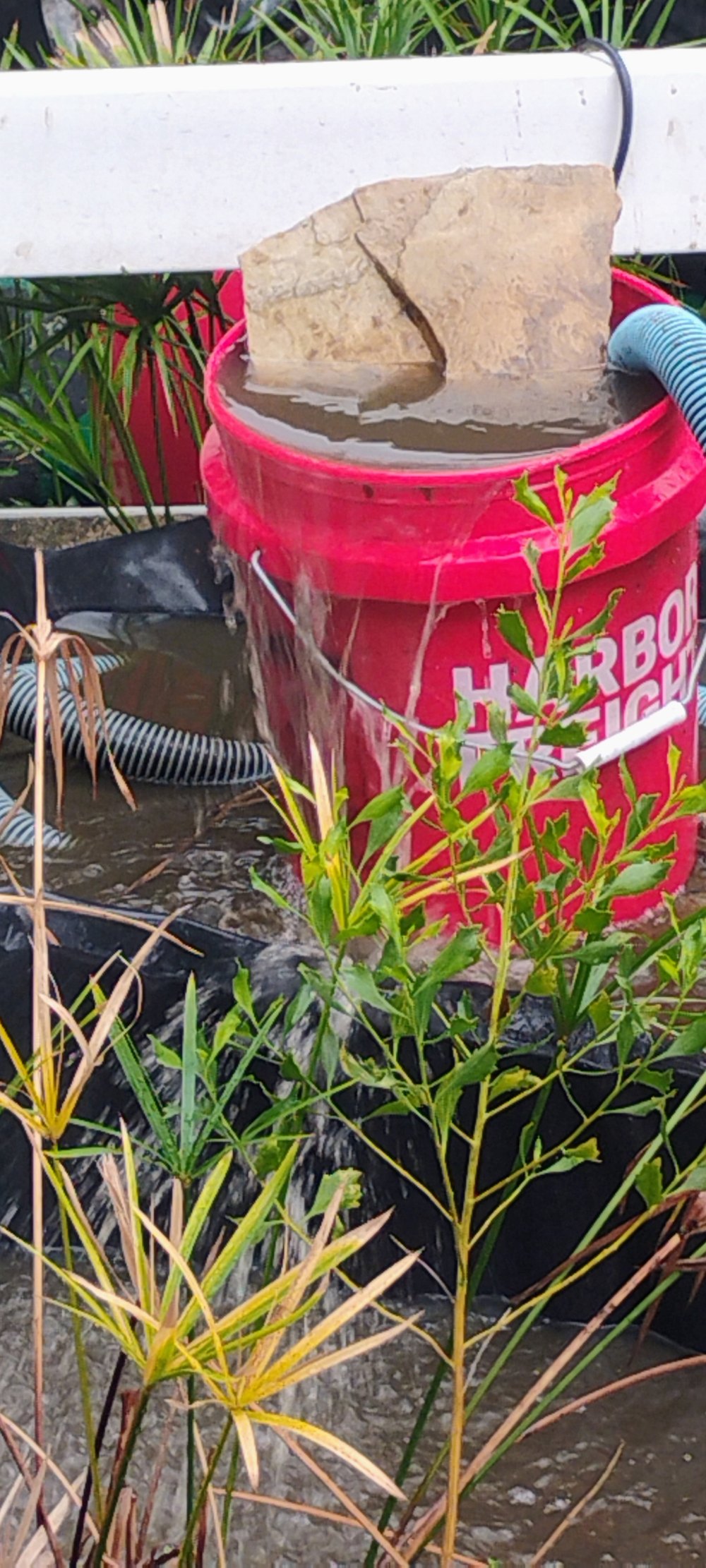
See the serviceable 5-gallon bucket filter I used for mechanical and biological filtration.
See the filter build → DebrisWhat does 20-PPI filter foam catch?
How I use cut-to-size foam, what it catches and when I clean rather than replace it.
See the foam setup → Flow controlWhy add a bypass around the UV?
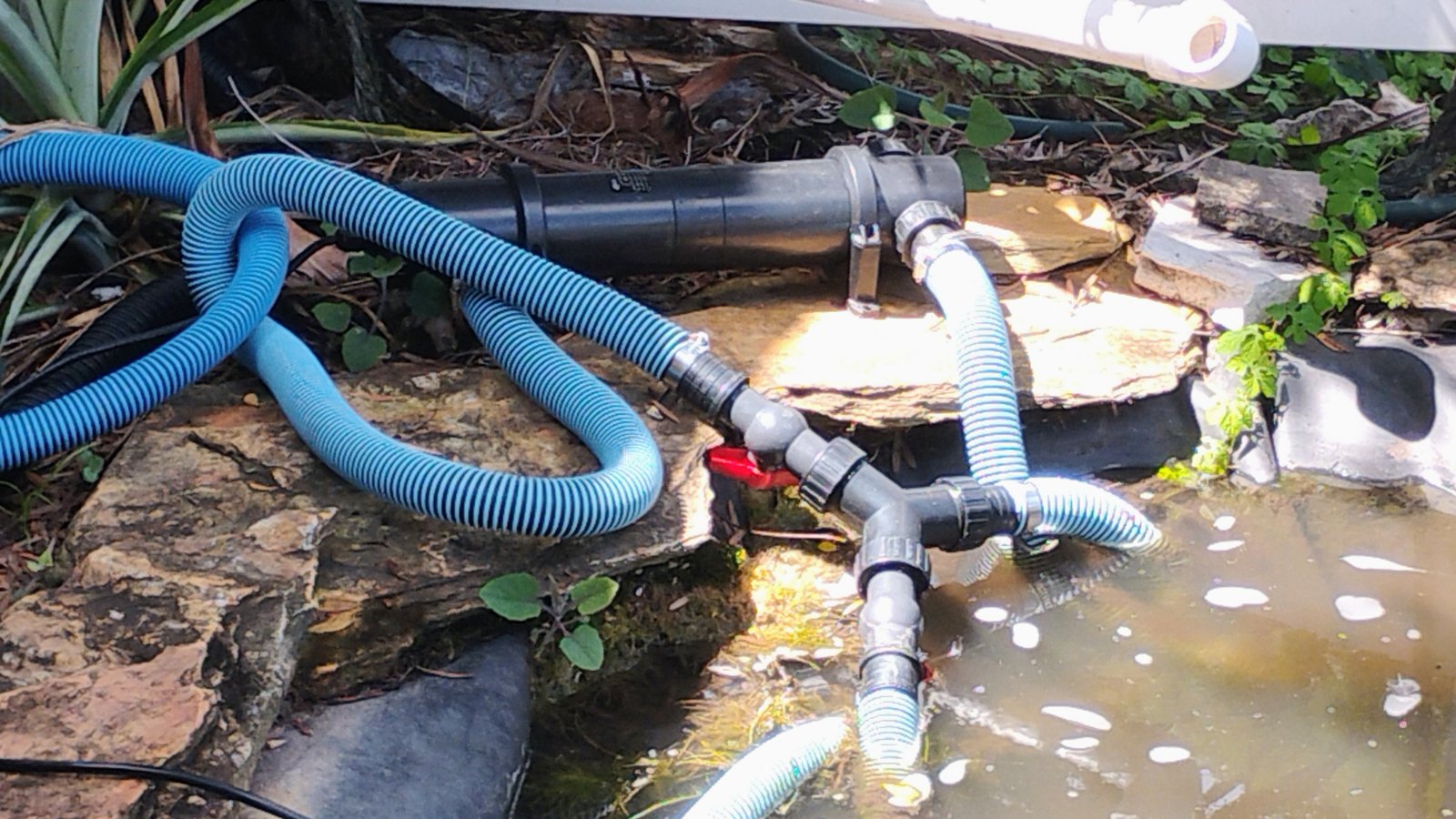
The 3-way split let me control UV flow without killing waterfall circulation.
See the plumbing lesson →Each component had one main job
This simple mental model stopped me from expecting one product to solve every water-quality problem.
| Part | What it did in my pond | What I learned |
|---|---|---|
| 1,800 GPH pond pump | Moved water through the system and back to the waterfall. | Nominal GPH is not the same as real delivered flow after plumbing and lift. |
| 20-PPI filter foam | Captured physical debris before it kept circulating. | Mechanical filtration needs cleaning; it is not the same job as UV or biological media. |
| Lava rock in a DIY bucket filter | Provided inexpensive wet surface area for biological filtration. | Cheap media can work, but weight and cleaning convenience matter. |
| 36W inline UV clarifier | Targeted the suspended algae causing the green-water appearance. | The UV became useful when I treated flow through it as a design variable. |
| 3-way bypass | Split and controlled water flow instead of forcing all pump output through the UV. | Plumbing layout can matter as much as the wattage printed on the box. |
| Waterfall return | Returned circulated water and provided an easy visual check that water was moving. | A pond system is easier to troubleshoot when you can see what each section is doing. |
The before-and-after is why this project belongs on WorthItScout
A practical troubleshooting order
Green suspended water, visible debris, weak circulation and string algae are not the same problem.
Before buying another pump or UV, know roughly how much water you have and where the flow has to travel.
Mechanical filtration gives leaves, fish waste and other solids somewhere to be captured instead of recirculated.
My clarifier was valuable for suspended green water; it was not a replacement for the rest of the filtration system.
A bypass gave me more control and made the system easier to tune.
That makes it much easier to learn what actually improved the pond instead of giving credit to the last product purchased.
If I cannot explain what a part did in the real system, it does not belong in the recommendation.
The pond guides are connected so you can move from symptom to explanation to the exact project evidence.